Since its introduction in 2007, the Audi A5 has established itself as one of the most elegant and accomplished models in the premium coupé segment. Combining understated styling, impressive refinement and advanced engineering, it quickly became a viable alternative to rivals such as the BMW 4 Series and Mercedes-Benz C-Class Coupé.
© Informa Plus / Shutterstock.com
Over successive generations, the Audi A5 has evolved through refined design updates, improved efficiency and advancing technology, while maintaining its distinctive character.
The latest model builds on this with further gains in capability and refinement. For owners of earlier models, this highlights how dramatically in-car technology has advanced over the past two decades. Specialist retrofit solutions now make it possible to integrate many modern comfort and safety features into older Audi vehicles, enhancing the driving experience while retaining the character of the original car.
The original Audi A5: establishing a modern classic
When the first-generation Audi A5 arrived, it represented a significant moment in design history. Created under the direction of renowned designer Walter de Silva, it combined elegant proportions with restrained styling, providing a coupé that has aged remarkably well.
Built on Audi's MLB platform architecture, the original A5 delivered the brand's trademark blend of comfort and premium build quality. Its long bonnet, sweeping roofline and well-defined wheel arches gave it a sporting presence. Inside, the cabin reflected Audi's reputation for impeccable craftsmanship. Materials were of exceptional quality, and the model was switchgear operated, with a selection of buttons, switches and dials providing precision and excellent ergonomics. Even by today's standards, early A5 interiors were impressive examples of thoughtful design.
However, technology expectations have changed considerably since the early 2000s. Features that many drivers now consider essential, such as advanced parking assistance and smartphone connectivity, were either unavailable or relatively basic in the earliest A5 models.
Bringing older Audi A5 models up to date
Parking assistance technology is one of the most useful areas for improvement, as it provides greater confidence when manoeuvring in confined spaces, particularly in urban environments. An Audi reverse camera retrofit dramatically improves visibility when reversing, integrating seamlessly with factory systems. Features such as dynamic guidelines and wide-angle views activate automatically when reverse gear is selected, providing clear real-time assistance.
Another practical upgrade, Audi parking sensors improve spatial awareness during low-speed manoeuvres and help prevent minor collisions. When professionally integrated, they maintain the factory appearance and functionality expected by Audi owners.
Comfort upgrades have also become increasingly popular, with heated seat retrofits providing a welcome addition during cold British winters. Technology such as hill hold assist improves drivability by preventing unintentional vehicle movement when stationary.
Audi A5: old vs new
Audi has stated that the latest A5 represents an evolution, rather than a revolution. Each successive model remains instantly recognisable, while incorporating subtle refinements that reflect changing tastes and technological capabilities.
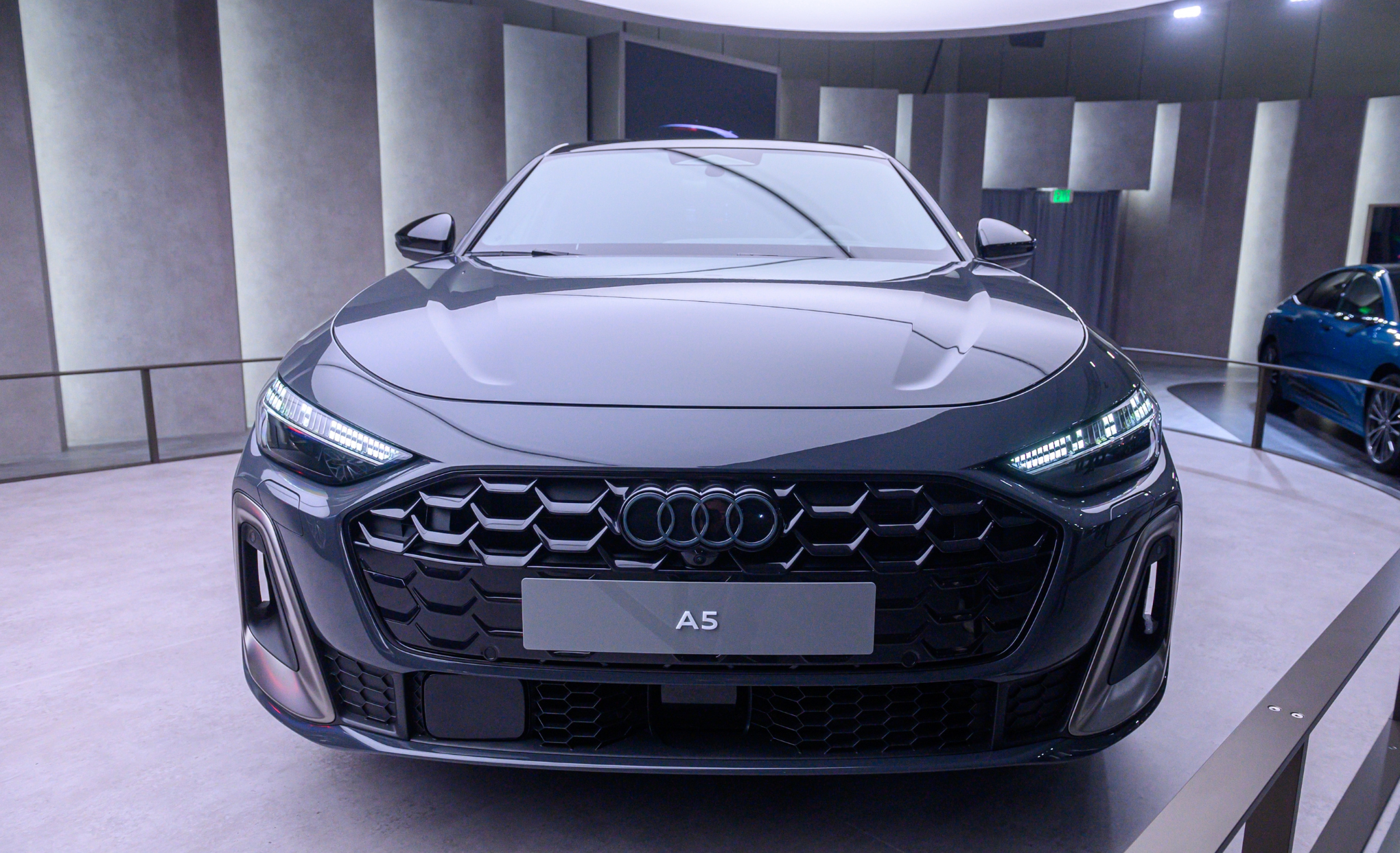
Comparing the old vs new models reveals how carefully Audi has developed the design language. The most recent car features a lower, wider grille, more angular lighting signatures and a sculpted front bumper design. At the rear, slimmer, full-LED lighting units and additional body creases create a broader, more defined appearance. The overall effect is a vehicle that retains the proportions of its predecessor but appears sharper and more athletic.
Improvements achieved through wind tunnel testing have enhanced aerodynamic efficiency, contributing to better fuel economy, lower wind noise and improved high-speed stability. Audi’s Virtual Cockpit introduces a fully digital instrument display with customisable layouts for key driving information.
The newest A5 benefits from a longer wheelbase, improving rear passenger legroom, while luggage capacity has increased from 455 to 465 litres.
Driving dynamics and engineering
The A5 has seen continual improvements in weight reduction, structural strength and overall efficiency. The latest model uses a newer platform architecture, incorporating advanced lightweight materials and improved structural engineering. Despite increased equipment levels and technology, the vehicle weighs around 60 kilograms less than its predecessor. The reduced weight improves acceleration and fuel efficiency, while also enhancing ride comfort and handling stability.
The engine range has also undergone significant revision. The previous entry-level 1.8-litre turbocharged petrol engine has been replaced by a more advanced 2.0-litre unit producing 187hp, improving both performance and efficiency. Diesel powertrains have similarly evolved. The 3.0-litre V6 diesel now produces 282hp compared with the previous 242hp while consuming significantly less fuel. Such improvements demonstrate the considerable progress manufacturers have achieved through advances in combustion efficiency, turbocharging technology and engine management systems.
The latest high-performance S5's turbocharged V6 develops 349hp, improving acceleration and simultaneously enhancing efficiency and refinement.
Equipment and technology
Modern A5 models incorporate advanced driver assistance and connectivity systems designed to support everyday driving. Adaptive cruise control now incorporates stop-and-go functionality, while lane assist systems can provide gentle steering inputs to maintain motorway positioning. Working together, these systems provide semi-autonomous capability that reduces driver workload during long journeys.
The latest MMI infotainment system features larger displays, improved graphics and integrated connectivity, including mobile hotspot capability.
A worthy successor
The latest Audi A5 refines the model’s familiar design language, delivering strong build quality, modern technology and a high level of refinement. It remains instantly recognisable while continuously evolving across generations.
For earlier models, retrofit solutions are a practical way to introduce modern features while preserving the character of the original vehicle.