Fitting a reversing camera is a practical upgrade for Ford owners, particularly those with older vehicles that weren't equipped with a factory-fitted camera or larger models where rear visibility can be more challenging.
A Ford reverse camera depends on the vehicle's model, age and existing equipment. The manufacturer has produced a wide range of cars, SUVs, MPVs and commercial vehicles, so the right retrofit solution for one model won’t necessarily suit another.
© Autologics
Benefits of a reversing camera
Industry figures from Accident Exchange suggest around 200,000 reversing accidents occur across all makes and models in the UK each year.
A reverse camera gives the driver an additional view of the area directly behind the vehicle. Particularly useful when navigating tight parking bays, reversing next to walls, or entering narrow driveways, it can also make low level obstacles near the rear bumper such as bollards, deep kerbs and posts easier to identify. It shouldn’t be viewed as a substitute for careful driving, but more as a useful aid to provide additional visual information.
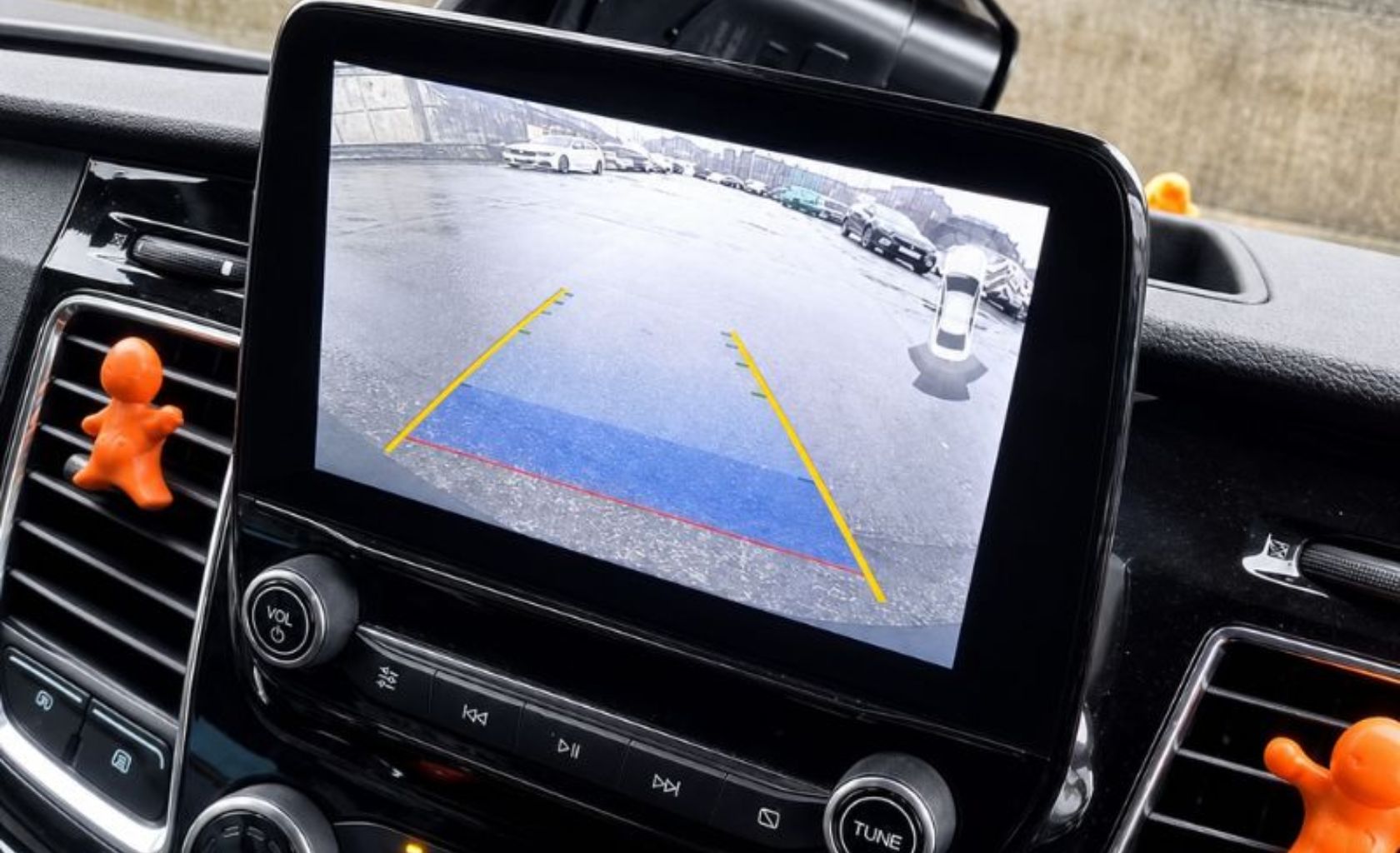
Camera systems can provide fixed parking guidelines showing the width or path of the vehicle, or dynamic guidelines that move as the steering wheel is turned. They should complement rather than replace mirrors, direct observation and normal reversing checks.
Help with reversing a van
Driving a van deserves particular attention, as its length and height, rear doors, cargo and limited visibility all make judging the available space more challenging.
A Ford Transit reversing camera may be positioned around the number plate area or mounted higher on the rear to provide a more useful perspective.
Choosing a reversing camera for Ford Transit vans starts with identifying the exact variant and its existing equipment. On compatible vehicles with a factory display, it may be possible to integrate the camera so the rear image appears when reverse gear is selected. Other vehicles may require a dedicated interface or additional components. Older or more basic vans without a compatible screen can use an aftermarket head unit or separate monitor.
Can a Fiesta use its existing screen?
A Ford Fiesta reverse camera retrofit depends on the vehicle’s age and specification. Later models with compatible infotainment systems may support camera integration while retaining the original screen and dashboard appearance. Older or lower-specification models may require a different installation approach if their existing equipment cannot accept a camera input.
The physical camera installation also varies. Model-specific units may replace or integrate with a number plate light, boot release handle or other existing fitting, helping to create a discreet installation.
Retrofitting a popular family car
The Ford Mondeo was once one of Britain's most popular family and company cars. Although UK production of the model ended in 2022, as buyer preferences increasingly moved towards SUVs, around 154,000 Mondeos remain in use on UK roads.
As the model was produced across several generations and specifications, there’s no single Ford Mondeo reverse camera solution. Owners should first establish the exact generation, model year and factory fitted infotainment equipment, which will determine whether additional integration hardware or coding is required.
Camera retrofits for historic cars
There are 48,415 Ford Galaxy cars taxed and on the road in the UK, after being manufactured for the European market between 1995 and 2023. Historically, it experienced periods of strong used car demand, including appearing among the fastest selling vehicles on UK forecourts, largely thanks to its generous passenger and luggage space.
A Ford Galaxy reversing camera can provide additional visibility of the area immediately behind this large MPV when parking. Integration with the original infotainment display may be possible and the camera itself can sometimes be installed discreetly around the tailgate, handle or number plate area.
SUV reverse camera options
The older Mk1 and Mk2 Kuga are among the more common pre-owned SUVs, with 380,418 active on UK roads. With several generations now in circulation, selecting a reversing camera for a Ford Kuga requires checking the individual vehicle. Earlier models have significantly different audio and display equipment from later examples equipped with Ford SYNC touchscreen systems. Consequently, a retrofit intended for one generation may not be compatible with another.
Ford’s cult classic car
There’s an important distinction to make when considering a Ford Puma reverse camera. The current SUV-style car is very different from the original Puma coupé produced between 1997 and 2002, which became a cult modern classic and the UK's best-selling coupé in 2000. Admired by enthusiasts for its driving dynamics, from a camera retrofit perspective, its age means its electronics and dashboard equipment bear little resemblance to those of the current Puma.
Retrofits for a popular diesel car
Tourneo models are another area where additional rear visibility can be particularly useful. Larger vehicles such as the Tourneo Custom can have long bodies, rear doors and flexible passenger or luggage configurations that affect the driver's rearward view.
Around 96% of UK Tourneo vehicles run on diesel, with comparatively small numbers of electrified or hybrid versions registered so far. Regardless of powertrain, camera compatibility should be established from the individual vehicle's model, age and equipment. Some models share technology and components with Ford's commercial vehicles, but a Ford Tourneo reversing camera retrofit is still specific to the individual model. Camera positioning should account for the individual vehicle's dimensions and rear-door configuration.
Compatibility and infotainment integration
Compatibility is a key consideration when selecting a Ford reversing camera, as the vehicle's infotainment system must support the camera's connection method. Some systems can display a reversing camera feed, but may require a dedicated interface or coding to activate the feature. Other displays may not offer a suitable camera input at all.
Even vehicles of the same model can have different requirements depending on their factory-fitted equipment. Checking the specification before choosing a retrofit helps establish which components are needed.
Professional vs DIY installation
Once compatibility has been established, installation involves selecting a suitable mounting position, making the correct electrical connections and ensuring the video signal reaches the display reliably.
Professional installation can be particularly worthwhile when retaining the factory infotainment screen or achieving a discreet, integrated finish.