The 1970s and 80s occupy a special place in British motoring history. These were decades when cars weren’t just a means of transport, but more milestones in people’s lives. They were a first car bought with hard-earned savings, family workhorses that carried children to school and suitcases to seaside holidays, and dependable companions that clocked up thousands of miles on Britain’s growing road network.
For many drivers today, the sight of a familiar badge or shape from that era instantly unlocks memories of freedom, aspiration and everyday life.
© M Barratt / Shutterstock.com
Looking back, it’s remarkable, and rather sad in some ways, that many of these once-omnipresent cars have now faded from our roads. Models that filled driveways and company car parks throughout the 1970s and ‘80s are becoming increasingly rare, edging towards extinction, rather than simply old age. However, their legacy remains strong and in many cases their values are rising as nostalgia meets scarcity.
A golden era of motoring
The appeal of cars from half a century ago lies partly in their accessibility. These were not exotic supercars, but were vehicles built for ordinary people. Manufacturers focused on practicality, durability and affordability, responding to a Britain that was changing socially and economically. Mass-produced cars grew larger in the early 1970s, then gradually became more aerodynamic and efficient as fuel crises and new design philosophies took hold.
It was also a period of huge transition. Safety standards improved, interior comfort became more important, and styling shifted from sharp, angular lines to softer, more aerodynamic shapes. The result was a generation of cars that felt modern for their time, but still retained mechanical simplicity; something that enthusiasts value today.
Ford: the backbone of British roads
No discussion of Britain’s favourite cars from this era can begin anywhere other than Ford. The American company dominated UK sales charts for decades, producing models that seemed perfectly tuned to British tastes and budgets.
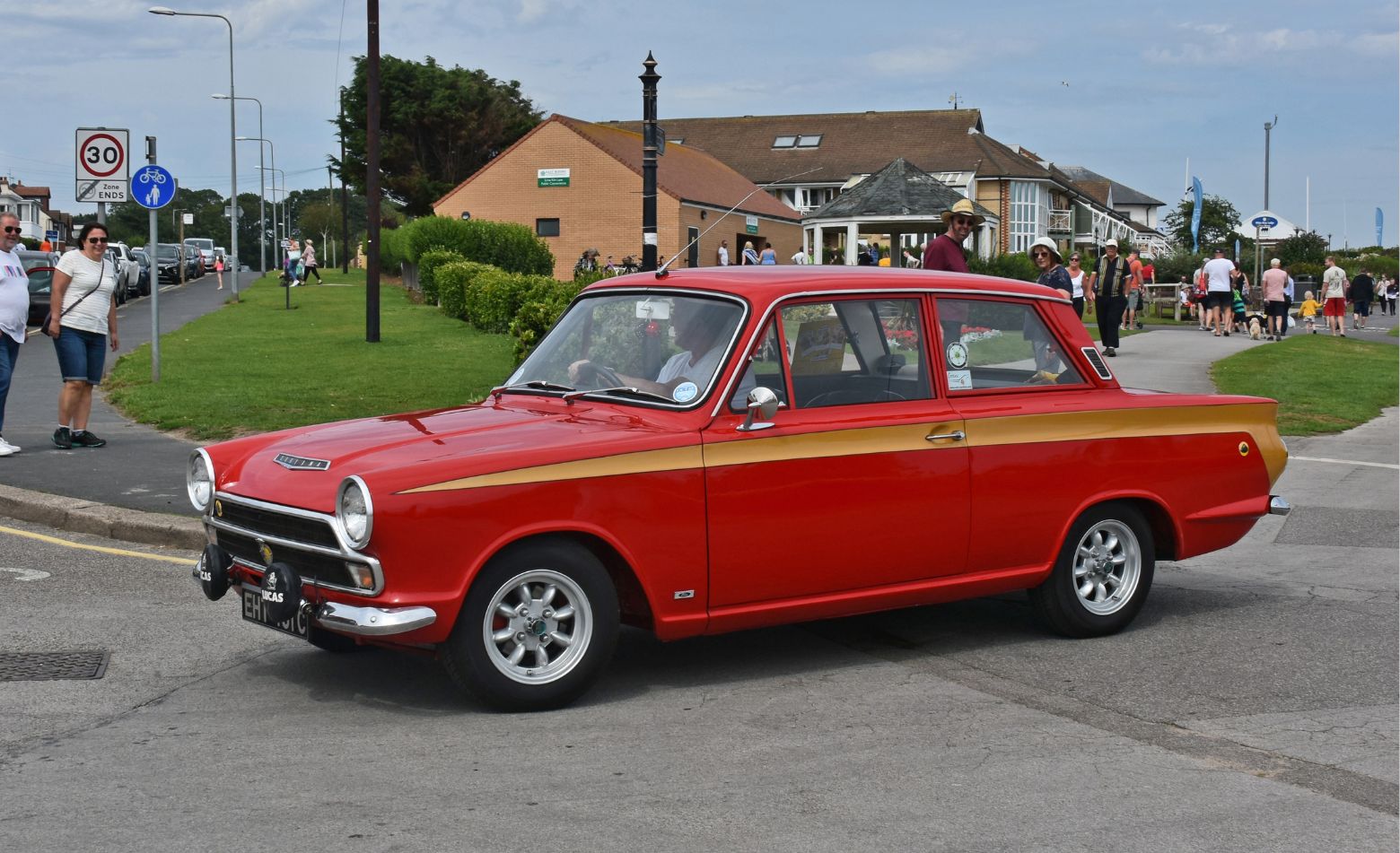
By the time Ford Cortina 1970 models were on the road, the name was already synonymous with dependable family transport. Production totalled more than 4.1 million units, making it one of Britain’s best-selling cars of all time. A standard Cortina in the early 1970s could be bought for around £600, a figure that made it attainable for a broad section of society. Adjusted for today’s prices, that would equate to well over £10,000 - still competitive by modern standards.
The later 1980 Ford Cortina marked the end of an era. When production ceased in 1982, many buyers were reluctant to move on, preferring the Cortina’s familiar shape and feel. Today, surviving examples are considered classics, with tidy models often valued at up to £15,000, and far more for rare performance versions. Despite millions once being built, only a few thousand are now registered for road use in the UK.
The Ford Sierra: ahead of its time
When the Ford Sierra 1982 was launched as the Cortina’s replacement, the reaction was mixed. Its aerodynamic styling was a radical departure from the boxy silhouettes motorists were used to, earning it the nickname “the jelly mould”. Initially, sales were cautious, but the Sierra gradually won over buyers as similar designs became more common. By the time the Ford Sierra 1990 models were circulating, the car had cemented its place as a British staple.
More than 3.4 million Sierras were produced, yet today, fewer than 3,500 remain registered in the UK. The steep decline was accelerated by years of hard use and the vehicle scrappage scheme of 2009–2010, which removed many otherwise restorable cars from the road.
Today, the Sierra occupies an interesting position. Once overlooked, it’s now gaining recognition as a modern classic, particularly sporting variants. Values vary widely, but even standard models are beginning to climb, thanks to nostalgia and rarity.
German alternatives and changing tastes
While British and American brands dominated the mainstream, German manufacturers quietly built reputations for quality and longevity. Cars like the Audi 50 and Audi 80 were popular choices for drivers seeking something a little different. The Audi 50, produced between 1974 and 1978, was an early entrant into the supermini market and shared much of its engineering with the Volkswagen Polo.
Despite respectable sales at the time, survival rates are extremely low. Many were simply used as everyday transport and discarded when repair costs outweighed residual value. Today, seeing an Audi 50 on UK roads is a genuine rarity, and well-kept examples are now treated as collectible classics.
Merecedes Benz followed a similar trajectory. Models such as the W114 and W115 saloons were once common sights, valued for their solidity and comfort. Rising fuel costs and maintenance expenses eventually thinned their numbers, and today, they are far less visible than their reputation for durability might suggest.
From ordinary cars to valuable classics
What unites many of these vehicles is how dramatically perceptions have changed. Cars that were once dismissed as mundane are now celebrated for their design, cultural impact and role in everyday life. Motoring events like Hagerty’s Festival of the Unexceptional at Grimsthorpe Castle, Bourne, highlight this shift, showcasing rarer cars that are now cherished survivors of an era.
Statistics underline the scale of loss. Insurance specialists have shown that models like the Morris Ital and Morris Marina number in dozens rather than thousands today. The £300 million vehicle scrappage scheme alone is credited with removing vast numbers of potential future classics from circulation, reshaping the car landscape permanently.
Nostalgia, preservation and modern ownership
For many owners, restoring or maintaining a 1970s or 1980s car is about far more than investment potential. It’s about reconnecting with memories of learning to drive, family road trips, or the first sense of independence that came with car ownership. These emotional connections are powerful and explain why interest in everyday classics continues to grow.
As these vehicles age, access to the right parts and technical knowledge becomes increasingly important. Preserving motoring heritage often depends on the availability of quality components and the expertise to use them properly.
Good riddance or good investments?
Are Britain’s favourite cars from the 70s and 80s best remembered fondly and left in the past, or should they be preserved as rolling history? For many enthusiasts, the answer is clear. These cars tell the story of a nation on the move, adapting to economic change, new technology and evolving tastes.
As values rise and numbers fall, what was once ordinary is becoming extraordinary. The Ford Cortina, Ford Sierra and their contemporaries are no longer just old cars. They’re symbols of an era, deserving of appreciation and care. For those lucky enough to still own one, they are living links to a time when Britain’s roads were shaped by cars that everyone knew, trusted and loved.