If you’ve driven anywhere in the UK recently, the chances are you’ve already encountered artificial intelligence in car industry developments without even realising it.
AI isn’t just something happening in Silicon Valley test labs, or futuristic concept cars. It’s quietly shaping the way we drive, how our vehicles behave and even how the police monitor our roads.
© AntonSAN / Shutterstock.com
For many drivers aged over 25, cars have evolved dramatically within a single generation. We’ve gone from paper maps and CD players to built-in sat nav, smartphone mirroring and advanced driver assistance. In many cases, car retrofit solutions are available to add useful tech to older cars. Now we’re entering another shift - one where artificial intelligence becomes part of everyday motoring.
AI is already on UK roads
When people hear the word “AI,” they often think of fully autonomous vehicles cruising around without steering wheels, but the reality is far more subtle and much closer to home.
Modern vehicles from brands such as Audi, BMW, Mercedes-Benz and Volkswagen already use artificial intelligence in vehicles to power driver assistance systems. Adaptive cruise control that adjusts to traffic, lane-keeping assistance to gently nudge you back into position and emergency braking that reacts faster than human reflexes all rely on sensor data and intelligent processing.
These systems use a combination of cameras, radar and sometimes LiDAR to build a picture of the road. It then analyses the data in real time, identifying vehicles, cyclists, pedestrians and road signs. It’s a clear step towards autonomous vehicle artificial intelligence becoming mainstream.
Many newer models can even monitor driver alertness. If the system detects erratic steering or signs of fatigue, it will prompt you to take a break. That’s AI working quietly in the background, helping to reduce risks.
The rise of AI speed cameras
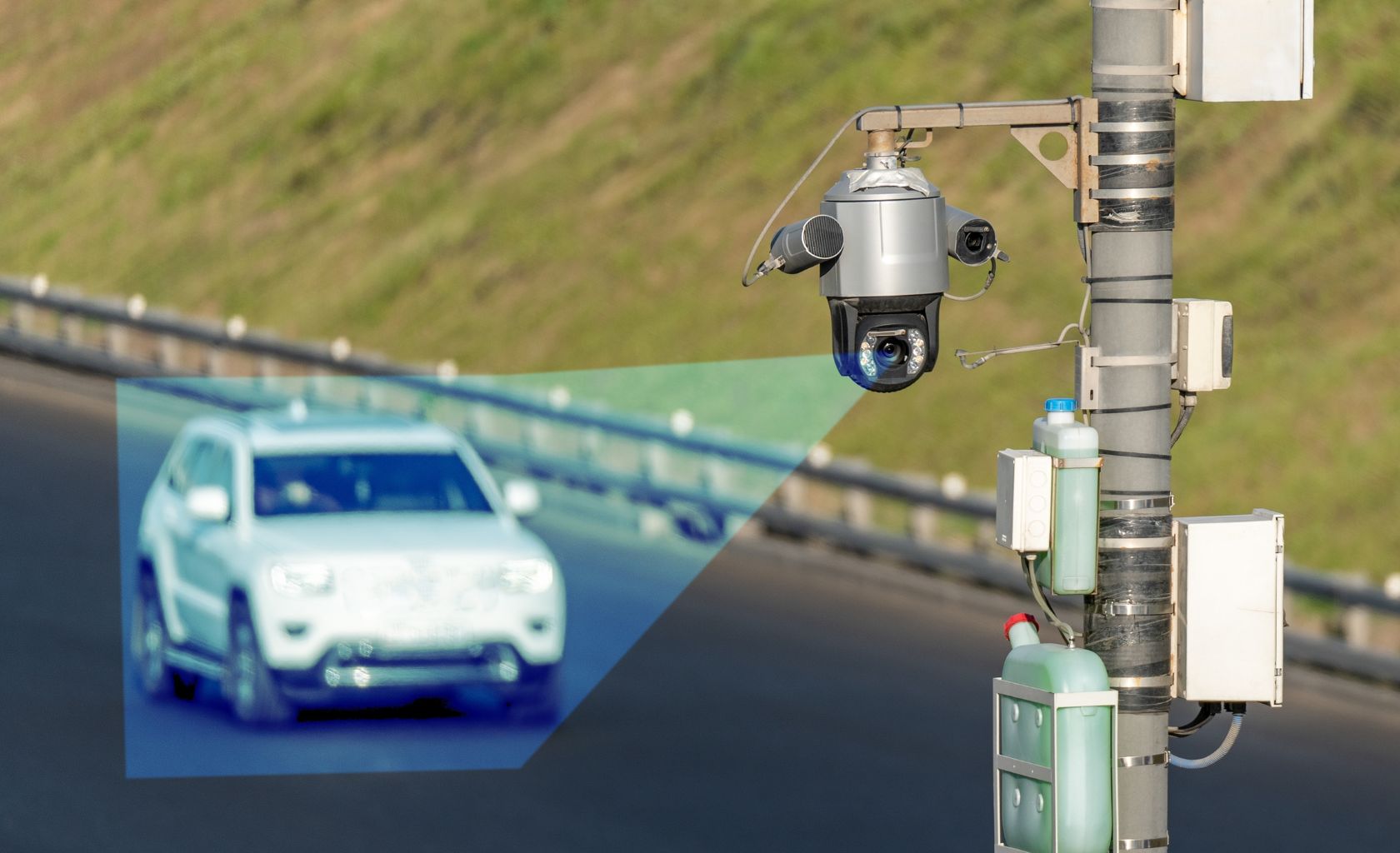
Revolutionary AI speed camera systems have recently been introduced in parts of the UK. A notable example is the Jenoptik Distracted Driver Enforcement System installed on Gdynia Way, near the Cattedown Roundabout in Plymouth. This busy stretch of road saw five serious and 24 slight collisions between 2020 and 2024, prompting action.
The system, developed by Jenoptik, uses two cameras to capture front-facing and overhead images. It analyses the footage to detect whether drivers are using a mobile phone or not wearing a seatbelt. Images are then reviewed by a human before a notice of intended prosecution is issued. This rollout follows similar technology from Acusensus, whose “Heads Up” cameras have operated across Devon and Cornwall for several years.
Nationwide, around one-third of all fatal collisions involve someone who wasn’t wearing a seatbelt. Data shows drivers are twice as likely to die in a serious crash if unrestrained: AI speed camera technology isn’t about catching people out for the sake of it, but more about reducing preventable harm.
From software-defined to AI-defined vehicles
In recent years, manufacturers have shifted to software-defined vehicles that receive over-the-air updates, improving systems without visiting a dealership.
Now the industry is moving toward AI-defined vehicles. Instead of just following programmed instructions, AI systems learn from patterns, analysing vast streams of sensor data from cameras, radar, and in-cabin monitoring. It can interpret unpredictable scenarios, from a child running into the road to sudden weather changes.
This is where self-driving AI technology becomes tangible. Companies like Waymo, originally part of Google, have driven millions of testing miles, refining machine learning models. The aim is to produce cars that can sense, predict and respond as effectively as a human driver, or even better.
How close are we to mainstream self-driving?
Fully autonomous cars on UK streets aren’t arriving tomorrow, but progress is accelerating. Many premium vehicles already offer Level 2 autonomy, where the car controls steering and speed in certain conditions, though the driver must stay attentive. Level 3 systems, allowing hands-off driving in limited scenarios, are starting to appear internationally under strict regulations.
In the UK, legal frameworks are evolving for wider deployment. The pace will feel gradual. You’ll likely first notice advanced motorway assist or automated parking before true hands-free commuting becomes normal.
Can AI get things wrong?
AI systems rely on data and algorithms, so they can misinterpret unusual situations, struggle in extreme weather or fail if sensors are obstructed. There have been high-profile incidents globally involving autonomous testing vehicles, reminding us that the technology is not infallible. Unlike a human driver, an AI system doesn’t “understand” context in the emotional sense. It processes probabilities. That means certain rare, unpredictable scenarios remain challenging.
That’s why lifecycle management is so important. AI models must be trained in the cloud, validated rigorously and updated continuously. Manufacturers need robust safety mechanisms and clear rollback procedures if something behaves unpredictably.
Crucially, most current systems offer driver assistance and are not replacements. You remain legally responsible behind the wheel unless operating under very specific approved autonomous conditions.
Not everyone is driving the latest model with built-in AI features, meaning many vehicles on the road pre-date advanced driver assistance systems. This raises an interesting question: could AI features be added later through car retrofit solutions?
At present, most advanced AI systems are integrated into vehicle architecture at the design stage. However, as technology evolves, we may see more sophisticated retrofit options emerge in the future. These could include enhanced camera systems, upgraded driver monitoring, or intelligent safety add-ons.
For now, any developments remain future-facing, but as costs fall and computing power increases, it’s not unrealistic to imagine broader access to AI-enhanced safety beyond new cars.
Accountability and your rights as a driver
As AI becomes more embedded in vehicles, questions of accountability grow louder. If an artificial intelligence self-driving car is involved in a collision, who is responsible - the driver, the manufacturer, or the software provider?
UK legislation is gradually addressing this. The Automated and Electric Vehicles Act has laid groundwork for clarifying insurance liability in approved autonomous modes. In essence, insurers may initially cover damages and then recover costs from manufacturers if the system is at fault.
For roadside enforcement, like AI speed cameras, human review remains part of the process. If you believe an offence has been incorrectly identified, you still have the right to challenge it through existing legal channels. Transparency will be key and drivers need to understand what their vehicle can and can’t do. Clear communication from manufacturers and regulators will shape public trust.
Safer or over-policed?
On one hand, AI offers enormous safety potential. Human error contributes to many collisions. If intelligent systems can reduce distraction, fatigue and misjudgement, lives could be saved. On the other, some drivers worry about excess surveillance. Cameras that can “see” inside vehicles raise understandable privacy concerns. The idea of cars constantly collecting data can feel intrusive. The reality probably sits somewhere in between.
Used responsibly, artificial intelligence in vehicles and roadside systems could reduce deaths and serious injuries significantly. Mismanaged, it could erode trust. Public consultation, transparent data use policies and strong regulations will determine which path we follow.
The automotive industry rarely changes overnight. It evolves in waves. Now we’re entering the era of AI-defined cars, it won’t mean giving up control tomorrow; it’s here to assist, monitor and help make decisions alongside human drivers.